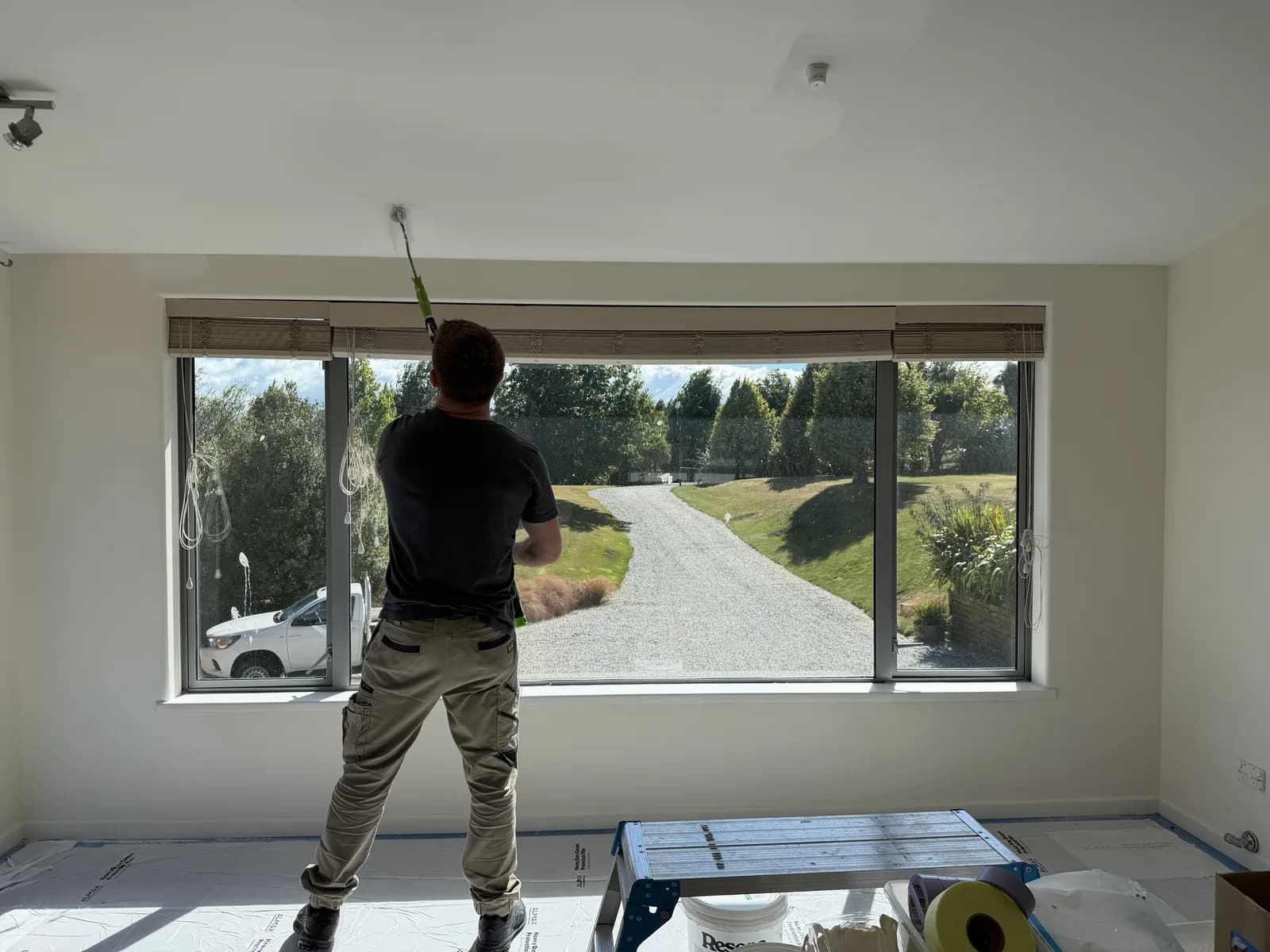
7 Signs Your Home's Interior Is Overdue for a Repaint
Bradley Hamilton
Lakeside PaintingOne of the most common questions I get asked, whether I'm quoting a job in Wanaka or chatting to a mate in Auckland, is some version of: "Do I actually need to repaint, or am I just over the colour?"
Fair question. Interior paint is more durable than people think — a properly prepped, well-applied coat in a low-traffic room can sit happily for 8–12 years. But there are a handful of telltale signs that say it's time, and once you know what to look for they're hard to unsee.
Here are the 7 I look for whenever I walk into a home for an interior quote.
Quick take: If you're nodding along to two or more of these, your interior is overdue. Most NZ homes are due for a refresh every 6–8 years for living areas, sooner for hallways and high-traffic spots.
1. Scuff marks and handprints that won't wash off
Modern paints like Resene SpaceCote and Dulux Wash & Wear are designed to clean up. But after about 5–8 years even the best wall-washing turns into wall polishing — you take the dirt off and a bit of the paint film with it.
If you've got a hallway, stairwell or kid's bedroom where the marks have stopped wiping clean, that's the paint telling you it's done. No amount of sugar soap is going to bring it back.
2. Yellowing ceilings (especially around the kitchen)
White ceilings don't stay white forever. Cooking grease, woodburner soot, candles and just everyday household life slowly yellow that crisp ceiling white into a tired off-cream. It happens so gradually that most homeowners don't notice until they paint one room and suddenly the rest of the house looks dingy.
If you can hold a sheet of A4 paper up to your ceiling and the ceiling looks darker — it's time. Ceilings are also one of the easiest things to forget about, which is exactly why they end up being the first sign a house looks "tired" overall.
3. Hairline cracks along cornices and door frames
NZ homes move. Seasonal temperature swings, timber framing settling, and the natural expansion and contraction of architraves and skirting all cause fine cracks where trim meets wall.
A bit of cracking is normal, but if you're seeing it along most of your cornice line or every door frame, it's a sign the original caulk and paint film have lost their flex. A repaint with fresh flexible caulk in the joints fixes it for another decade. Painting over the cracks without re-caulking is one of the most common shortcuts I see — and the cracks come back within months.
4. The colour is dating the house
This is the one most people are too polite to admit, but it matters when it comes time to sell — or even just to invite people round.
Beige everywhere, "Resene Half Tea" on every wall, dark feature walls, sponge effects, brown trim — these are the dead giveaways that a home was last painted in the late 90s or 2000s.
If you've ever caught yourself apologising for the wall colour to guests, or stopped taking photos in the lounge because the colour looks dated in the background — your interior is dating you. A modern neutral (Resene Black White, Dulux Whisper White, Resene Sea Fog, Resene Alabaster) will pull the whole house forward 20 years for the cost of a weekend's worth of paint.
For more on picking the right colour, check out our guide on how light affects interior design in NZ homes and our colour selection guide.
5. Patchy sheen — some bits look shinier than others
Run your hand along a wall in raking light (early morning or late afternoon sun). If you can see patches that catch the light differently — some shinier, some flatter — that's "burnishing" or "polishing", and it usually means one of two things:
- The paint has been touched up multiple times with slightly different products
- The finish has worn unevenly in high-traffic zones (around light switches, behind doors, along hallways)
You can't fix this with another touch-up — you'll just make it worse. The only way to even it out is a full wall (or full room) recoat. If sheen consistency matters to you, this is also a good time to think about matte vs low sheen vs satin — burnishing is much less obvious in flatter finishes.
6. You can see the previous colour ghosting through
This one happens a lot in DIY paint jobs done in a hurry. A single coat of light paint over a darker old coat will eventually start "ghosting" through, especially in north-facing rooms that get strong UV.
If a wall looks fine in the morning but a bit blotchy at 4pm — that's UV pulling the under-layer through. A proper two-coat repaint over an undercoat (where needed) sorts it for good. If you're going significantly lighter than the existing colour, pick the right primer — it's the difference between a pro finish and a job you'll redo in two years.
7. The house has been listed, or is about to be
If you're selling in the next 6–12 months, fresh interior paint is one of the highest-ROI things you can do — typically returning 2–4× the cost in higher offer prices and faster sales.
Buyers in 2026 expect a turnkey home. Tired interior paint is the first thing that drops a property into the "needs work" mental bucket — even when the actual fix is a few thousand dollars and a long weekend.
Even just doing the main living areas, hallway and master bedroom in a fresh modern neutral makes a huge difference at open homes. For more on this, our pre-sale painting ROI guide breaks down which rooms are worth doing and which ones aren't.
So how often should you repaint?
As a rough rule of thumb for NZ homes:
- Hallways, stairwells, high-traffic areas: every 4–6 years
- Living rooms, kitchens, dining: every 6–8 years
- Bedrooms (adult): every 8–12 years
- Ceilings: every 8–12 years (longer in non-cooking spaces)
- Trim and doors: every 6–10 years (high-touch points wear faster)
Holiday homes, Airbnbs and rentals tend to need it sooner — guest wear-and-tear adds up faster than you'd think.
How to tell if it's just one room or the whole house
A quick trick: stand in your doorway, close one eye, and look at each wall in turn under raking light. Walls that show two or more of the signs above (scuffs, sheen patches, ghosting) are due. Rooms where all four walls show signs need a full repaint, not spot touch-ups — touch-ups will just create more sheen patches and you'll be back to square one in 18 months.
If most rooms in the house are nodding to two or more of these, it's usually cheaper per square metre to do the whole interior in one hit than to do it room-by-room over three years. Painters give better pricing on a continuous run, and you only have to live through the disruption once.
Next step
If you've read this far, you're probably overdue. Get a quote from a local painter — most reputable painters offer free in-home walkthroughs and will give you an honest read on what's actually needed versus what can wait. Don't be shy about asking for a tiered quote (cheap option / proper option / gold-standard option) — any decent painter will be happy to put one together.
Based in Wanaka or Central Otago?
I run Lakeside Painting out of Wanaka and we cover Albert Town, Hawea, Luggate, Cardrona, Cromwell, Queenstown and the surrounding lakes. If you want a free walkthrough and an honest tiered quote, get in touch here or have a read of our Wanaka-specific take on this same topic: 7 Signs Your Wanaka Home's Interior Needs a Repaint.
If you're outside our patch, the same checklist works wherever you are in NZ — find a painter with good reviews, ask for two referrals from past clients, and never accept a quote that doesn't itemise prep separately from paint.
Related Reading
- The Complete Guide to Interior Painting in New Zealand — the deeper dive on prep, primers and paint selection
- Best Time of Year to Repaint Your Wanaka Home Interior — seasonal timing for interior work
- Gloss vs Matte vs Low Sheen — picking the right finish for each room
- Pre-Sale Painting ROI for NZ Homes — what's worth painting before you list

About the Author
Bradley Hamilton
Bradley Hamilton has spent over 15 years painting homes across New Zealand and runs Lakeside Painting in Wanaka. He's repainted everything from coastal Auckland villas to alpine Central Otago holiday homes.
Visit Lakeside Painting
Comments
Join the conversation by signing in
No comments yet.
Be the first to share your thoughts!