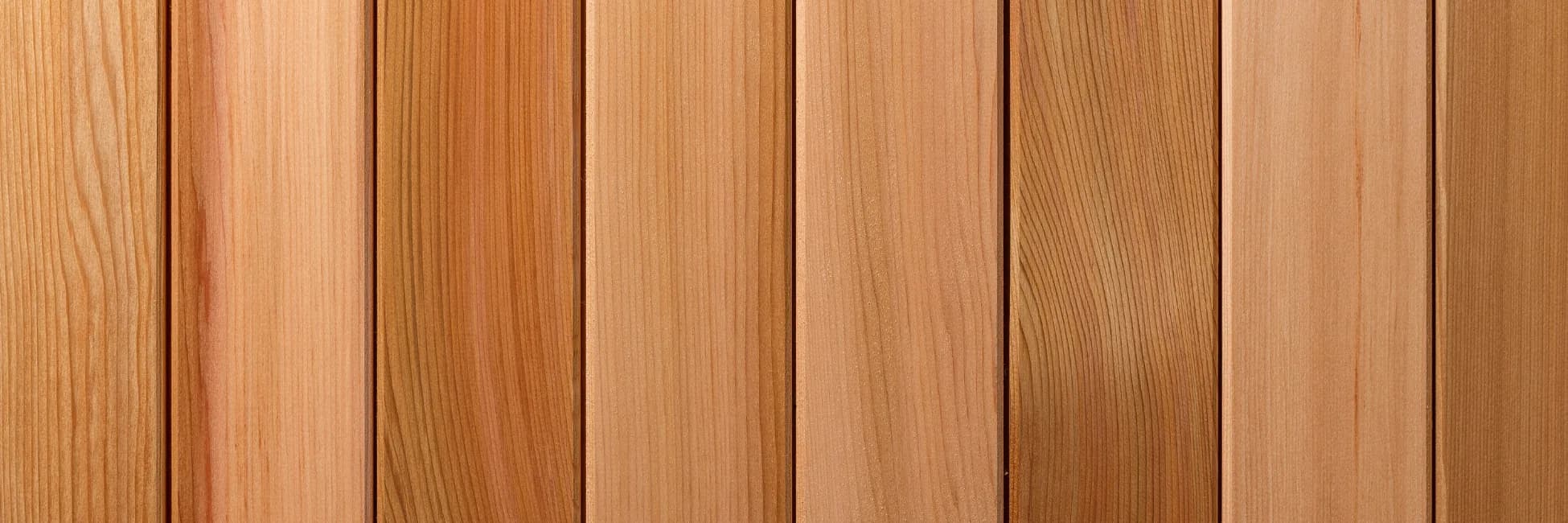
New Cedar Cladding: How Long Can You Leave It Bare Before You Coat It?
Bradley Hamilton
Lakeside PaintingAlmost every cedar post I write is about cedar that's already had a hard life. Grey, black, peeling, or coated with something nobody can identify. This one's the opposite. It's about cedar on day one, and a decision that quietly sets up the next twenty years of the cladding.
I see this one constantly around Wānaka, Northlake, Hanley's Farm and Shotover Country. The build's running late, the cladding went up months ago, the house is still a building site, and the painter's booked in for "sometime after the scaffolding comes off." Meanwhile the cedar is sitting there bare in full Central Otago sun, waiting.
And somewhere along the way, someone has said the words. A builder, a neighbour, or a bloke at the merchants: "Nah, leave it to weather first. You want to let it breathe before you put anything on it."
That advice is wrong, it's been wrong since about the mid-eighties, and the people who actually make cedar have formally debunked it. Up here it also costs real money, so it's worth going through properly.
The short answer
Cedar should be coated as soon as you practically can, and the useful window is measured in weeks rather than months or seasons.
The Western Red Cedar Lumber Association is the industry body for the timber itself, not a coatings company trying to sell you something, and they put it plainly: cedar left unfinished and exposed to the weather, even for just a few weeks, has a compromised ability to hold a finish. Their working number is that cedar exposed for longer than two weeks may already have a degraded surface and need remediation before you coat it.
They go further than that, and it's worth quoting directly, because it's almost word for word the advice you're probably being given: "Cedar should not be left unfinished for 6 to 12 months as suggested by some finish manufacturers and others."
One honest caveat before we go on. Most of the hard research behind that rule was done on paint and film-forming finishes, and the WRCLA's own line is that penetrating finishes don't need as much surface prep. So if you're going on with a penetrating oil, which is what most cedar around here gets, you've got a bit more forgiveness than a painted board would have. Not six months' worth, but a bit.
Why the clock runs so fast here
If you've read the chemistry of cedar this'll sound familiar, because it's exactly the same mechanism doing the damage, just at the wrong moment.
Cedar's cell walls are held together by lignin, the aromatic polymer that glues the fibres into a solid surface. Lignin is also the bit that absorbs UV, so it takes the hit. Sunlight breaks it down at the surface, rain washes the fragments away, and what you're left with is a layer of loose, unbonded cellulose fibre.
That layer is the problem. When you finally come along with an oil or a stain months later, you're not bonding to sound timber at all, you're bonding to degraded fluff that's only loosely attached to the board underneath. Your coating can be the right product, applied perfectly, and it will still let go early.
The US Forest Products Laboratory has measured what this actually costs, on western red cedar specifically. Boards painted straight after installation showed no peeling at all after twenty years. Boards left to weather for one week first peeled after thirteen years. Boards left sixteen weeks peeled inside three.
Those numbers are worth sitting with for a second. Sixteen weeks of nothing happening, which is one delayed building season, took a twenty year finish down to a three year one. The Lab's recommendation for softer species like cedar is to finish it as soon as you can after installation, or better still, prime it before it goes up.
Then factor in where we live. New Zealand's peak UV runs about 40% higher than the same latitude in the Northern Hemisphere. NIWA put that down to lower summer ozone over the Southern Hemisphere, the earth sitting closer to the sun during our summer, and unusually clean air with very little pollution in it. On top of that, Central Otago is one of the sunniest, driest and least cloudy parts of the country, with long summer days and snow reflection through the winter.
So treat the overseas timelines in the cedar literature as a ceiling rather than a target. If your north and west faces have been sitting bare through a Central Otago summer, they haven't been "seasoning," they've been getting damaged.
The mill glaze thing, since someone will bring it up
The "let it weather first" advice usually comes bundled with a story about mill glaze. The idea is that planing leaves a varnish-like film of resin and sap on the surface of the board which stops coatings sticking, and that a few months of weather is needed to break it down.
The WRCLA are refreshingly blunt about this: it's a myth. Western red cedar doesn't contain sap or migrating resins in the first place, so there's nothing there to glaze. The Forest Products Laboratory went looking for it deliberately too. They planed cedar with dull blades at high feed pressure, which is exactly what's supposed to cause it, and couldn't produce a glazed surface or reproduce the paint failure. Every failure they looked at turned out to have an ordinary explanation.
What really happened is that a pattern of coating failures got pinned on the wrong culprit. The WRCLA even publish the scenario that typically gets misdiagnosed as mill glaze, and it reads like a list of construction site sins: no primer, one thin coat sprayed on, boards left out in the weather four weeks or more, no back-priming, timber delivered and stored on the ground where it soaked up moisture, and a house design with little or no eave overhang.
Have a look through that list. There isn't a single property of the timber in it. It's all decisions somebody made on site.
So when a painter tells you to leave new cedar weathering for six months, what they're really doing is repeating a fix for a problem that was never there, and creating a genuine one on the way past.
The part almost nobody does: all six sides
This next recommendation will probably annoy you, because it's inconvenient as well as correct.
The WRCLA recommend finishing cedar on all six sides before it goes up, meaning the face, the back, both edges and both ends, or else buying it with a factory-applied finish. For a natural or semi-transparent oil stain, the oil goes on every surface, not just the bit you'll be able to see.
The reason is moisture movement rather than looks. A board that's coated on the face only can still drink water freely through the back and the end grain, and that moisture has to get out somewhere. It leaves through the coated face, which is what's behind cupping, splitting, and blistering with water sitting in the blisters. It's also how you end up with tannin bleed streaking down your joinery and your concrete, because water tracking through uncoated timber picks up cedar's water-soluble extractives and carries them out with it.
End grain is far and away the worst offender, and the scale of it surprises people. BRANZ put water uptake through end grain at up to 100 times the rate of the face of the board. Their guidance on timber weatherboards is to seal every cut end straight after cutting and before the board goes on the wall, using two coats of premium oil-based primer or an aerosol end-seal product.
In practice, six-side coating almost never happens on a New Zealand residential build. Boards get cut on site and fixed within the hour. But there are two things that are genuinely achievable, and I'd push for both on any new cedar job.
Seal the cut ends as you go. It takes seconds a board and it's the single most valuable thing anyone on that site can do for the lifespan of the cladding.
Get the first coat on early, before the scaffolding comes down and before the boards have copped a full season of sun.
And if you're still at the specification stage, ask your supplier about pre-finished or factory-coated cedar. It'll cost you more up front, but it's a lot cheaper than a strip-back in year six.
What if it's already been sitting there bare?
This is where most people reading this will actually be. The cedar's been up four months, it's gone patchy and pale on the sunny side, and the ideal window has been and gone.
That's not a disaster, it just means the job now includes a step it wouldn't otherwise have needed.
You have to get back to sound fibre before you coat. That degraded surface layer needs to come off, or your coating has nothing solid to grab. Depending on how far it's gone, that means washing and brushing with a stiff non-ferrous brush (never steel wool or a wire brush, which leave iron behind in the timber and give you black staining down the track) and quite often a sand. For a film-forming finish on smooth flat-grained cedar the WRCLA specify a scuff-sand with 50 to 60 grit, which improves how the coating performs and doesn't spoil the smooth look. Textured or band-sawn cedar generally doesn't need it.
Whether you sand before a penetrating oil is more contested in the trade here, and reps will give you different answers. The argument against is that sanding closes up the surface you want the oil to soak into. My own take is that if the board has visibly greyed off, the fibre needs to come off regardless of what's going on top.
Don't just wash it and hope. A wash takes off dirt and mould, but it does nothing about degraded, lignin-depleted fibre. And leave the waterblaster in the shed. The WRCLA's position is that power washing should never be used on cedar, because it tears up the surface fibres and drives water into the timber, so you finish up worse off than when you started.
Check the ends and the bottom edges first. They'll tell you the most. If the end grain has gone dark and furry and the bottom edges of the boards are splitting, the timber's been taking on water and you want that looked at before anything goes over the top of it.
Watch the moisture content. This one catches people out in Central Otago, because our air is so dry that things feel ready well before they are. Timber that's been rained on needs proper drying time before an oil goes near it, and coating over damp cedar is a reliable way to end up with a patchy, slow-curing finish that never quite comes right.
If you're not sure how far gone yours is, that's a fair thing to get someone to look at rather than guess. On the jobs I've quoted, the gap between "wash, scuff and coat" and "this needs a proper sand-back" is usually a few thousand dollars on an average house, and it isn't something anyone can call off a photo.
What to expect from the first coat, and the one after it
The other thing that catches new-build owners out is that the first coat isn't the end of it.
New cedar is thirsty. It drinks that first application, and the coverage you get on coat one is nothing like what you'll get on a maintenance coat five years down the track. So really the first coat is a pair of coats, and the second one comes round sooner than most people expect.
Dryden's recommendation for fresh cedar started on WoodOil is a top-up coat within 30 to 90 days of the first, not twelve months later. That's not a sales pitch, it's just how migrating oils build up to a useful level in timber that's never had any in it. After that they're looking at an annual soft wash and an inspection, with maintenance recoats somewhere in the 12 to 36 month range depending on how the cladding is actually tracking.
In my experience around Wānaka that works out to roughly two to three years on the sheltered elevations and a good deal more often on the north and west faces. It's completely normal here to be doing the sunny sides about twice as often as the rest. Whatever you do, finish whichever face you start on, because if you stop halfway up a wall you'll be looking at that join forever.
Be a bit careful with whatever longevity number you get quoted, too, because even the WRCLA's own published figures disagree with each other. Their finishing guide gives water-repellent oils one to two years, semi-transparent stains one to three years on smooth timber and two to four on textured, and solid-colour stains three to five smooth and four to six textured. Their current siding literature quotes three to six years for a well-applied oil-based semi-transparent. All of those are Northern Hemisphere numbers anyway. In Central Otago I'd plan on the lower end of whichever range you're given, and it's worth knowing that textured or band-sawn cedar beats smooth in every single one of those rows.
The short version
- The "let new cedar weather first" advice is a myth built on a misdiagnosis. Don't follow it.
- The useful coating window is weeks, and in Central Otago sun, fewer weeks than the overseas numbers suggest.
- What degrades is the lignin at the surface, the same process that turns old cedar grey, just happening before you've had a chance to protect it.
- Seal every cut end as the boards go up. End grain drinks water up to 100 times faster than the face. Coat all six sides if you possibly can.
- If it's already weathered you can still get a great result, you just have to get back to sound fibre first, usually with a scuff-sand rather than only a wash. No waterblaster.
- Budget the first coat plus a top-up 30 to 90 days later, then maintenance recoats every one to three years, sunny faces more often.
Cedar is a fantastic cladding and it'll look superb for decades if the first year goes right. Most of the tired, blotchy, prematurely failing cedar I get called out to around Wānaka didn't fail because the owner picked the wrong product. It failed because of what did or didn't happen in the months straight after it went up.
Get that bit right and the rest is just maintenance.
— Brad
Building, or just finished a build with cedar cladding around Wānaka or Queenstown? I'm happy to come and tell you where your timber's actually at before you commit to a product. Get in touch via Painters Wanaka.
Related reading: The Chemistry of Cedar for what's going on inside the timber, and Restaining Cedar Over an Old Coating for when the first coat was the wrong one.

About the Author
Bradley Hamilton
Bradley Hamilton has been staining and restoring cedar across Central Otago for 15 years. From new builds in Northlake to full strip-and-restains in Albert Town, he's worked through every product on the market in this climate and writes about what actually holds up. He also runs Lakeside Painting in Wānaka.
Visit Lakeside Painting
Comments
Join the conversation by signing in
No comments yet.
Be the first to share your thoughts!