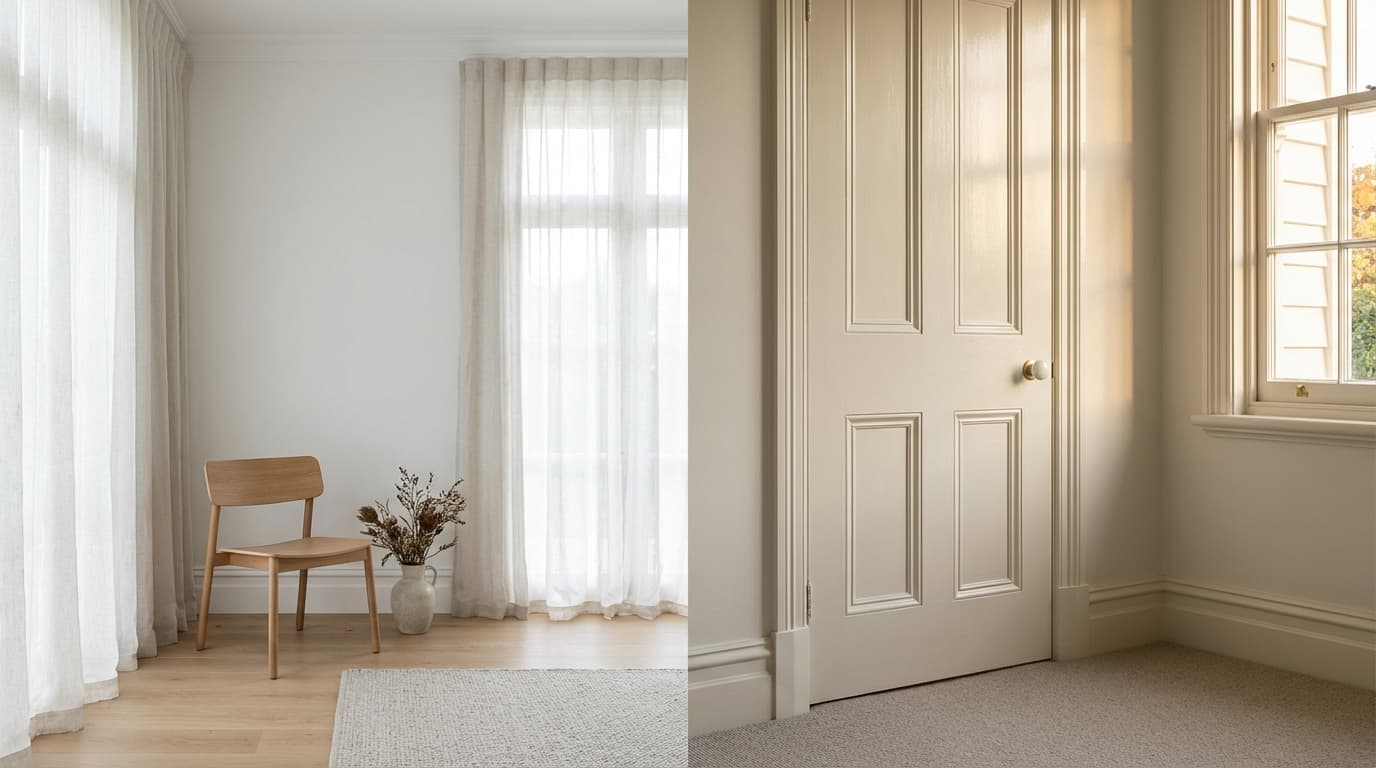
Water-Based vs Oil-Based Paint
Bradley Hamilton
Lakeside PaintingThe Great Paint Debate: What Every Kiwi Homeowner Needs to Know
Let me take you back to 2011. I was painting a heritage villa in Arrowtown, and the homeowner insisted on oil-based paint throughout. "That's what the old painters used," he said. "It's the proper way."
Three days later, I was still waiting for the first coat to dry in his lounge. The whole family had evacuated to a motel because the fumes were unbearable. And when I finally finished? The beautiful white trim started yellowing within 18 months.
Fast forward to today, and I use water-based paints for about 95% of my work. Not because I'm lazy (though the cleanup is certainly easier), but because the technology has genuinely caught up - and in many cases, surpassed - what oil-based paints used to offer.
But here's the thing: oil-based paints still have their place. Knowing when to use each type is what separates a paint job that lasts from one that fails.
Let me break down everything you need to know about both types, specific to New Zealand conditions and products.
Understanding the Basics: What's Actually in the Tin?
Before we dive into applications, let's get clear on what we're actually talking about.
Water-Based Paints (Acrylics and Latex)
Water-based paints use water as their primary solvent. When you apply them, the water evaporates, leaving behind acrylic or vinyl polymers that form your paint film.
What's in the tin:
- Water (40-60%)
- Acrylic or vinyl resins (the binders that hold everything together)
- Pigments (colour)
- Additives (for flow, drying, mould resistance, etc.)
Common names you'll see in NZ:
- Acrylic paint
- Latex paint (American term, same thing)
- Water-based enamel
- Acrylic enamel
Oil-Based Paints (Alkyds and Solvent-Based)
Oil-based paints use petroleum-derived solvents (typically mineral turps or white spirit) as their carrier. The solvent evaporates, leaving alkyd resins that cure through oxidation - they literally react with oxygen in the air.
What's in the tin:
- Solvent/mineral turps (30-50%)
- Alkyd resins (derived from vegetable oils)
- Pigments
- Drying agents
Common names you'll see in NZ:
- Oil-based paint
- Alkyd paint
- Solvent-based paint
- Enamel (traditionally, though water-based enamels now exist)
The Head-to-Head Comparison
Let me give you the honest breakdown based on what I've seen over 14 years of painting New Zealand homes.
Drying Time
Water-based: Touch dry in 30 minutes to 2 hours. Recoat in 2-4 hours. Full cure in 2-4 weeks.
Oil-based: Touch dry in 6-8 hours. Recoat in 16-24 hours. Full cure in 2-4 weeks.
What this means in practice:
With water-based, I can do two coats in a day easily. On a three-bedroom house interior, that's the difference between a week's work and two weeks' work.
In Central Otago's dry climate, water-based dries even faster - sometimes too fast. I often add Floetrol to slow it down and prevent lap marks. In coastal Dunedin, where humidity is higher, drying times are more predictable.
Oil-based in our dry Queenstown air? It actually dries reasonably well. But in humid conditions or cool weather, you're looking at overnight between coats minimum.
Odour and VOCs
Water-based: Low odour, typically 50-150 g/L VOCs (some premium products under 50 g/L).
Oil-based: Strong solvent smell, typically 300-400 g/L VOCs.
Why this matters:
VOCs (Volatile Organic Compounds) are the chemicals that off-gas as paint dries. They're what you smell, and they're not great for your health.
I've painted occupied homes with water-based products where the family stayed the whole time - windows open, but liveable. Try that with oil-based and you'll have headaches, nausea, and very unhappy clients.
For rental properties or homes you're living in during renovation, water-based is the only sensible choice.
Durability and Hardness
Water-based: Modern acrylics are impressively durable. They stay flexible, which actually helps them resist cracking. Slight softness compared to oil.
Oil-based: Cures to a very hard finish. More scratch-resistant initially, but becomes brittle over time.
The nuance here:
Ten years ago, I'd have said oil-based was clearly more durable for high-traffic areas. Today? Water-based enamels like Resene Lustacryl and Dulux Aquanamel have closed that gap significantly.
The brittleness issue with oil-based is real. On timber that expands and contracts (basically all timber in NZ), oil-based paint eventually cracks because it can't flex. Water-based stays flexible and moves with the substrate.
Colour Retention
Water-based: Excellent. Maintains colour for years without yellowing.
Oil-based: Yellows over time, especially whites and light colours. Also fades more in UV.
This is a big deal:
That beautiful white oil-based trim you painted? In 2-3 years, it'll have a cream/yellow tinge. Not noticeable immediately, but put something new and white next to it and you'll see it instantly.
I've had clients call me back to repaint "faded" trim that was actually just yellowed oil-based paint. Water-based doesn't have this problem.
For anything white or light-coloured, water-based is the clear winner.
Adhesion
Water-based: Excellent on most surfaces when properly prepared. Can struggle on very glossy oil-based surfaces without sanding.
Oil-based: Superior adhesion to problematic surfaces - bare metals, chalky old paint, tannin-rich timbers.
When oil-based adhesion matters:
- Painting over old, chalky exterior paint that's not worth stripping
- Bare steel or iron (though specialist primers are better)
- Cedar or other bleeding timbers (as a primer)
- Very high-gloss surfaces you can't or won't sand
For everything else, water-based with proper prep adheres beautifully.
Self-Levelling and Finish Quality
Water-based: Has improved dramatically but can show brush marks more than oil. Spraying gives a flawless finish.
Oil-based: Excellent self-levelling. Brush marks flow out naturally for a smooth finish.
The honest truth:
For brush-and-roll work on doors and trim, oil-based still gives a slightly smoother finish in the hands of an average DIYer. The paint "flows" better and forgives technique mistakes.
Professional painters can get equivalent results with water-based using:
- Proper brush technique (load well, don't over-brush)
- Additives like Floetrol or Penetrol
- Spray application
If you're a DIYer tackling a front door, oil-based enamel might give you a better result. But weigh that against the cleanup, smell, and yellowing.
Cleanup: Where Water-Based Wins Hands Down
Let's be honest - this is where water-based paint changed my life.
Cleaning Water-Based Paint
What you need:
- Warm water
- Dish soap
- A bucket or sink
The process:
- Scrape excess paint off brushes/rollers onto newspaper
- Rinse under running water until water runs clear
- Work soap through bristles/nap
- Rinse again
- Shake out excess, reshape, and dry
Time: 5-10 minutes per brush
For dried-on paint: Soak in warm soapy water for 30 minutes. Most will soften and wash out.
For skin: Warm water and soap. Easy.
For clothes: Wash immediately in cold water. If dried, you might save them with warm water and scrubbing.
Cleaning Oil-Based Paint
What you need:
- Mineral turps (white spirit)
- Paint thinner
- Old containers for dirty solvent
- Dish soap
- Well-ventilated area
- Potentially a respirator
The process:
- Scrape excess paint off brushes
- Swirl brushes in container of turps (first wash)
- Squeeze out, transfer to second container of cleaner turps (second wash)
- Repeat until turps stays clean
- Wash with dish soap and warm water to remove turps residue
- Condition natural bristle brushes with linseed oil
Time: 15-20 minutes per brush, plus managing dirty solvent
For dried-on paint: Soak in turps for several hours or overnight. May not fully recover.
For skin: Turps or baby oil first, then soap and water. Not pleasant.
For clothes: Basically ruined. Turps might help, but oil-based paint on fabric is usually permanent.
The Environmental Factor
Those dirty solvents from oil-based cleanup? They're hazardous waste. You can't pour them down the sink or into the garden. In New Zealand, you need to take them to a transfer station or hazardous waste collection.
Water-based paint wash water can go down the sink in small quantities (check with your local council for large amounts).
This alone is why many professional painters have switched to water-based wherever possible.
Application Methods: Getting the Best Results
Brush Application
Water-Based Tips:
- Use synthetic bristle brushes (Purdy Clearcut, Wooster Shortcut)
- Load the brush well - don't skimp on paint
- Work quickly to maintain a wet edge
- Don't over-brush - lay it off and leave it
- In hot/dry conditions, add Floetrol (50-100ml per litre)
- For trim and doors, use a quality angled brush (63mm/2.5")
Oil-Based Tips:
- Natural bristle (China bristle) works best - holds more paint, releases smoothly
- Can also use Chinex synthetic bristles designed for oils
- Load brush, tap (don't wipe) on tin edge
- Paint has longer open time - you can work it more
- Lay off with light, even strokes
- Don't go back into partially dried paint
Brad's recommendation for brushes:
For water-based, I use Wooster and Purdy brushes exclusively. The Purdy XL Glide is my go-to for cutting in, and the Wooster Shortcut for trim. About $25-40 each from Resene or Bunnings, but they last years if cleaned properly.
For oil-based (when I use it), I have a set of Hamilton Perfection natural bristle brushes. They're an investment ($50+), but the finish quality is worth it.
Roller Application
Water-Based Tips:
- Microfibre rollers (10-12mm nap) give the smoothest finish
- Use a quality roller frame that doesn't wobble
- Load evenly, roll off excess on the tray
- Work in W patterns, then even out
- Don't press too hard - let the paint flow
- Keep a wet edge to avoid lap marks
Oil-Based Tips:
- Mohair or velour rollers (4-6mm nap) for smoothest finish
- Foam rollers for very smooth surfaces (but watch for bubbles)
- Same technique as water-based, but slower
- Longer open time means you can work larger areas
Roller covers I recommend:
Microfibre Whizz rollers (available at Resene) for water-based - they give an almost sprayed finish. About $15 each, washable dozens of times.
For oil-based trim, the small foam rollers from Dulux work well for doors and cabinets - just apply thin coats.
Spray Application
Water-Based:
- HVLP (High Volume Low Pressure) or airless sprayers both work
- Thin 5-10% with water if needed
- 1.4-1.8mm tip for most applications
- Clean immediately after use - water-based dries fast in gun
Oil-Based:
- Traditional spray guns work beautifully
- Usually no thinning required
- 1.4-1.6mm tip
- Thorough cleaning with solvent required
When to spray:
Spraying gives the best finish for cabinets, doors, and large flat surfaces. If you're doing kitchen cabinets, spray them regardless of paint type.
For walls, rolling is usually more practical unless you're doing a whole empty house.
Where to Use Each Type: The Practical Guide
Use Water-Based For:
Interior walls and ceilings (95% of the time) Products: Resene SpaceCote, Dulux Wash & Wear No contest here. Water-based is faster, easier, healthier, and performs beautifully.
Interior trim and doors (90% of the time) Products: Resene Lustacryl, Dulux Aquanamel, Wattyl Aqua Enamel Modern water-based enamels are excellent. They don't yellow, they're durable, and cleanup is easy.
Exterior walls and weatherboards Products: Resene Lumbersider, Dulux Weathershield, Wattyl Solagard Water-based exterior paints flex with timber movement and resist UV better than oil-based.
Bathrooms and kitchens Products: Resene SpaceCote Kitchen & Bathroom, Dulux Wash & Wear Kitchen & Bathroom The moisture resistance of modern acrylics is excellent, and they don't trap moisture behind the film like some oil-based paints can.
Children's rooms and nurseries Products: Resene Zylone Sheen (low VOC), Dulux Wash & Wear Low Sheen Low odour and low VOC make water-based the only sensible choice.
Use Oil-Based For:
Sealing problem stains (as primer) Products: Resene Sureseal (solvent), Zinsser BIN (shellac) Water damage stains, smoke damage, tannin bleed - oil-based sealers block these where water-based primers fail.
Bare or rusted metal (as primer) Products: Dulux Metalshield Primer, Resene Galvo-Prime For iron gates, steel doors, or metal roofing where rust is a concern.
High-wear timber floors (specific products) Products: Wattyl Estapol, Cabots CFP Floor finishes are a different category, but traditional oil-based polyurethanes still dominate here.
Heritage restoration where authenticity matters Some heritage consultants specify oil-based for authentic finishes. This is becoming rare.
Priming cedar and tannin-rich timbers Cedar can bleed tannins through water-based paint. An oil-based primer (Resene Wood Primer, Dulux 1 Step Oil Based) seals this effectively.
The "Either Works" Situations:
Front doors Some painters prefer oil-based for the self-levelling finish. I use water-based enamel with Penetrol additive and get excellent results.
Skirting boards and architraves Water-based enamel is my standard, but oil-based gives a slightly harder finish if you're worried about scuffs from vacuum cleaners.
Outdoor furniture Either works. Oil-based is more forgiving of imperfect prep, water-based is easier to maintain.
Product Recommendations for New Zealand
Based on what I use and trust, here are my picks:
Water-Based Products
For Interior Walls:
| Product | Best For | Price Range | Notes |
|---|---|---|---|
| Resene SpaceCote Low Sheen | Living areas, bedrooms | $130-150/10L | My go-to. Durable, washable, great coverage |
| Dulux Wash & Wear | High-traffic areas | $120-140/10L | Excellent scrub resistance |
| Resene Zylone Sheen | Low odour required | $140-160/10L | Very low VOC, good for occupied homes |
For Interior Trim (Water-Based Enamels):
| Product | Best For | Price Range | Notes |
|---|---|---|---|
| Resene Lustacryl | Doors, trim, all interior | $110-130/4L | Industry standard, excellent durability |
| Dulux Aquanamel | High-wear areas | $100-120/4L | Great self-levelling |
| Wattyl Aqua Enamel | Budget-conscious | $80-100/4L | Good value, decent performance |
For Exterior:
| Product | Best For | Price Range | Notes |
|---|---|---|---|
| Resene Lumbersider | Weatherboards, most exteriors | $280-320/10L | Excellent UV resistance |
| Dulux Weathershield | Coastal areas | $250-290/10L | Great salt spray resistance |
| Wattyl Solagard | Central Otago UV | $260-300/10L | My pick for extreme UV |
Oil-Based Products
Primers:
| Product | Best For | Price Range | Notes |
|---|---|---|---|
| Resene Wood Primer | Bare timber, cedar | $90-110/4L | Excellent tannin blocking |
| Resene Sureseal | Stain blocking | $100-120/4L | The nuclear option for problem stains |
| Zinsser BIN | Severe stains, odours | $120-140/4L | Shellac-based, blocks everything |
Enamels (for those who prefer them):
| Product | Best For | Price Range | Notes |
|---|---|---|---|
| Resene Super Gloss | Ultra-hard finish needed | $110-130/4L | Traditional oil enamel |
| Dulux Enamel Gloss | Doors, trim | $100-120/4L | Good flow and levelling |
Additives That Make a Difference
Floetrol (for water-based): $20-25/L Extends drying time, improves flow, reduces brush marks. Essential in hot, dry conditions. Add 50-100ml per litre.
Penetrol (for oil-based): $25-30/L Same benefits for oil-based paints. Also helps penetrate weathered timber.
Climate Considerations for NZ
Our New Zealand climate creates some unique challenges that affect paint choice.
Central Otago (Queenstown, Wanaka, Cromwell)
Challenges: Extreme UV, temperature swings (-5°C to 35°C), very low humidity in winter, hot dry summers.
Water-based adjustments:
- Always use Floetrol in summer - paint dries too fast otherwise
- Apply early morning or late afternoon to avoid lap marks
- Choose products with enhanced UV protection (Wattyl Solagard is excellent here)
Oil-based considerations:
- Dries faster than expected in dry air - good and bad
- UV degradation is accelerated - expect shorter recoat intervals
Coastal Areas (Dunedin, Nelson, West Coast)
Challenges: Salt spray, higher humidity, frequent rain, mould growth.
Water-based advantages:
- Breathability helps moisture escape from timber
- Mould-resistant formulations available
- Handles humidity fluctuations better
Oil-based considerations:
- Can trap moisture, leading to paint failure
- Extended drying times in high humidity
Auckland and Northern NZ
Challenges: High humidity, UV, warm temperatures most of year.
Water-based works excellently:
- Humidity generally not high enough to cause issues
- Low VOC important in warm, occupied homes
Common Mistakes and How to Avoid Them
Mistake 1: Using Oil-Based on New Timber Without Considering Tannin Bleed
The problem: New cedar or pine can bleed tannins through paint, causing brown stains.
The fix: Oil-based primer (Resene Wood Primer) first, then your preferred topcoat. For extreme bleed, use Zinsser BIN shellac primer.
Mistake 2: Applying Water-Based Over Glossy Oil-Based Without Prep
The problem: Water-based paint can't properly adhere to glossy oil surfaces.
The fix: Sand the surface thoroughly (180-grit), clean, and use a bonding primer (Resene Waterborne Smooth Surface Sealer) before topcoating.
Mistake 3: Using Oil-Based in Unventilated Areas
The problem: Fumes build up, creating health hazards and slow drying.
The fix: Either switch to water-based (preferred) or ensure serious ventilation - fans exhausting outside, not just open windows.
Mistake 4: Expecting Oil-Based White to Stay White
The problem: All oil-based paints yellow over time, especially whites.
The fix: For white or light colours, use water-based. If you must use oil-based, accept some yellowing.
Mistake 5: Cleaning Oil-Based Tools Down the Drain
The problem: Solvents contaminate waterways and damage septic systems.
The fix: Clean into containers, let solids settle, pour off clean solvent for reuse, and dispose of residue at a transfer station.
The Bottom Line: What Should You Actually Use?
After 14 years of painting across New Zealand, here's my honest advice:
For 95% of interior painting: Use water-based paint. The technology has caught up, the health benefits are significant, and the convenience is unbeatable. Resene SpaceCote for walls, Resene Lustacryl for trim - you can't go wrong.
Keep oil-based for:
- Problem stains that bleed through (Zinsser BIN or Resene Sureseal)
- Priming tannin-rich timbers like cedar
- Specific applications where you need maximum hardness
Don't use oil-based because:
- "That's how it's always been done" - technology has moved on
- "It's more durable" - not necessarily true anymore
- "The finish is better" - skill and technique matter more than paint type
The best paint job isn't determined by whether you used water-based or oil-based. It's determined by proper preparation, the right product for the situation, good technique, and attention to detail.
Choose the paint that makes sense for your specific job, your health, and your sanity. For most Kiwi homeowners, that's water-based.
Quick Reference: At-a-Glance Comparison
| Factor | Water-Based | Oil-Based |
|---|---|---|
| Drying time | 2-4 hours between coats | 16-24 hours between coats |
| Odour | Low | Strong |
| VOCs | 50-150 g/L | 300-400 g/L |
| Cleanup | Soap and water | Mineral turps |
| Yellowing | No | Yes |
| Durability | Excellent (modern formulations) | Excellent |
| Self-levelling | Good (with additives) | Excellent |
| Best for walls | ✓ | |
| Best for trim | ✓ (modern enamels) | ✓ (traditional choice) |
| Stain blocking | Limited | Excellent |
| UV resistance | Excellent | Good |
| Flexibility | Excellent | Poor (becomes brittle) |
| Coverage | 12-16 m²/L | 14-18 m²/L |
Need help with your painting project? For professional painting services in Queenstown, Little Dog Decorating has the expertise to choose and apply the right products for your home. In Wanaka, Painters Wanaka offers expert advice on paint selection and professional application tailored to Central Otago conditions.
Questions about paint types for your specific project? Drop a comment below or get in touch - I'm always happy to share what I've learned over 14 years in the trade.

About the Author
Bradley Hamilton
Bradley Hamilton is a seasoned painter with over 14 years of experience in the industry. Having worked with a wide range of clients, from homeowners to commercial businesses across Queenstown and Central Otago, he has developed a deep understanding of what it takes to deliver exceptional painting results. His expertise spans both interior and exterior projects, with a focus on quality craftsmanship and attention to detail.
Visit Lakeside Painting
Comments
Join the conversation by signing in
No comments yet.
Be the first to share your thoughts!