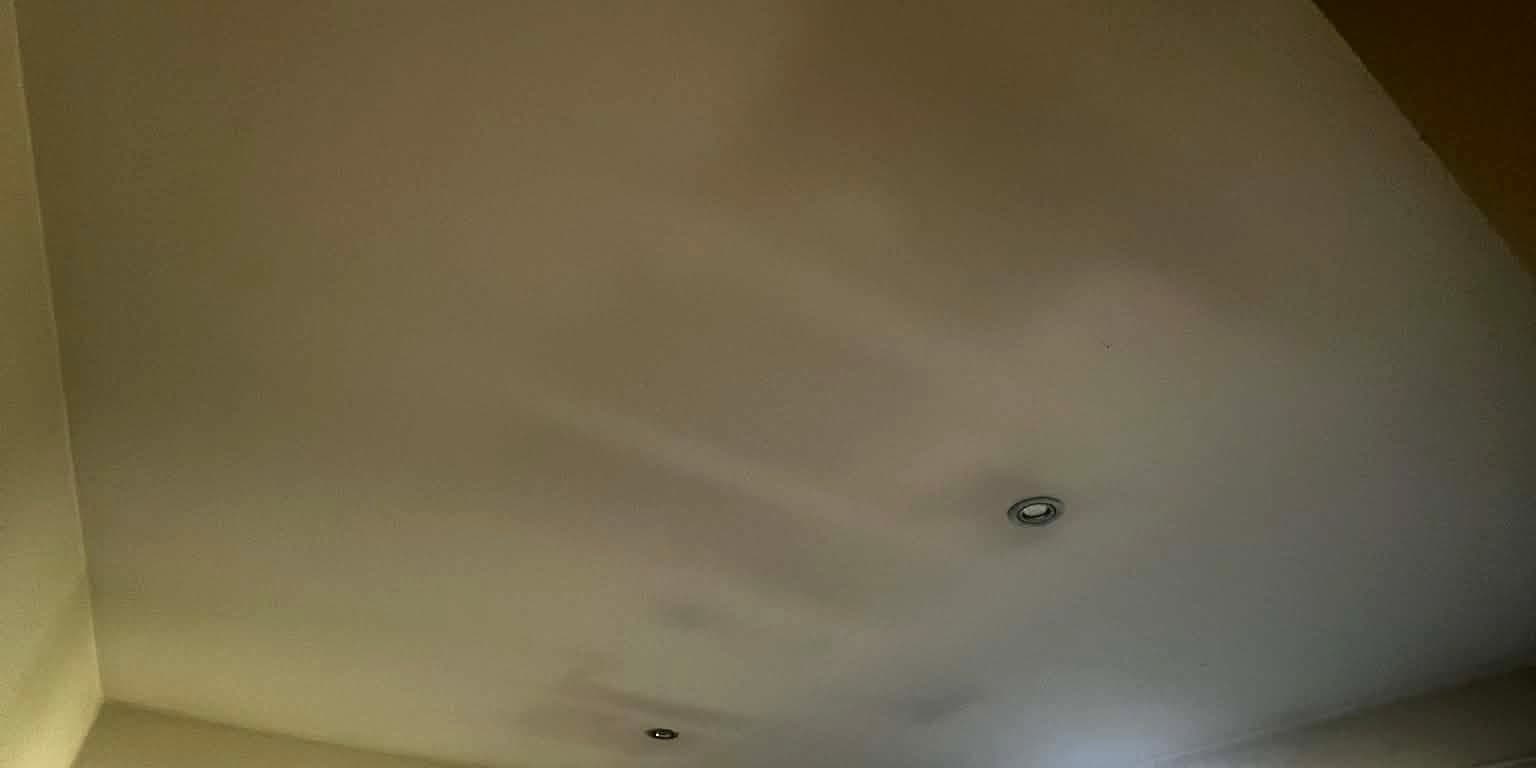
Ghosting on Walls and Ceilings: The Science Behind Those Shadowy Grid Marks (And How to Stop Them Coming Back)
Bradley Hamilton
Lakeside PaintingThere's a particular mark that catches people out. You look up at the ceiling and there's a faint grid of darker lines, evenly spaced, like someone traced the roof framing onto the plasterboard with a soft pencil. Or it's on a wall this time - shadowy vertical stripes climbing up from the skirting, darker patches lurking behind where the wardrobe sits, a grubby halo around a downlight.
Most people reach for one of two conclusions: the room is filthy, or it's mould. Usually it's neither. What you're looking at is ghosting - and once you understand what's actually causing it, both the fix and the way to stop it returning make a lot more sense.
This is a national problem, not a regional one. I see it in weatherboard bungalows in Auckland, brick-and-tile places in Christchurch, and alpine homes down my way in Central Otago. Wherever there's a temperature difference across a surface and something in the air to settle on it, ghosting can appear. Here's the whole story.
What ghosting actually is (the part most articles skip)
Ghosting is a pattern of fine, dark particles that have settled onto the coldest parts of a wall or ceiling. To get there, three things have to line up.
1. The surface isn't one even temperature. Behind your plasterboard sits a frame - joists and nogs on the ceiling, studs and dwangs on the walls. Timber conducts heat differently to the insulation batts packed between the framing. So directly over a stud or joist, the plasterboard surface runs a degree or two colder than the insulated bays either side. Missing, slumped or thin insulation makes cold patches instead of neat lines. This uneven temperature is called thermal bridging, and it's the template the ghost is printed from.
2. Those cold spots sit closer to the dew point. Warm indoor air holds moisture. When that air touches a cooler surface, the moisture wants to condense - and it reaches the point of condensation on the coldest surfaces first. So the strips over the framing stay very slightly damp, or at least more humid at the surface, far more of the time than the warmer plaster around them.
3. Fine airborne particles plate out onto the cold, damp strips. This is the bit that turns an invisible temperature map into a visible stain. Microscopic particles drifting in the air - soot, smoke, cooking grease, candle carbon - drift toward colder surfaces through an effect called thermophoresis (heat physically pushes particles from warm toward cool). The cold, faintly damp strips are stickier, so the particles bond there and build up. Painters sometimes call this plating out.
Run that for a couple of winters and the maths does the rest: the framing "appears" through the paint as a grey grid, and the cold corners and cold walls develop shadowy clouds. It looks like dirt or mould. It's really just physics printing a picture of your wall's temperature.
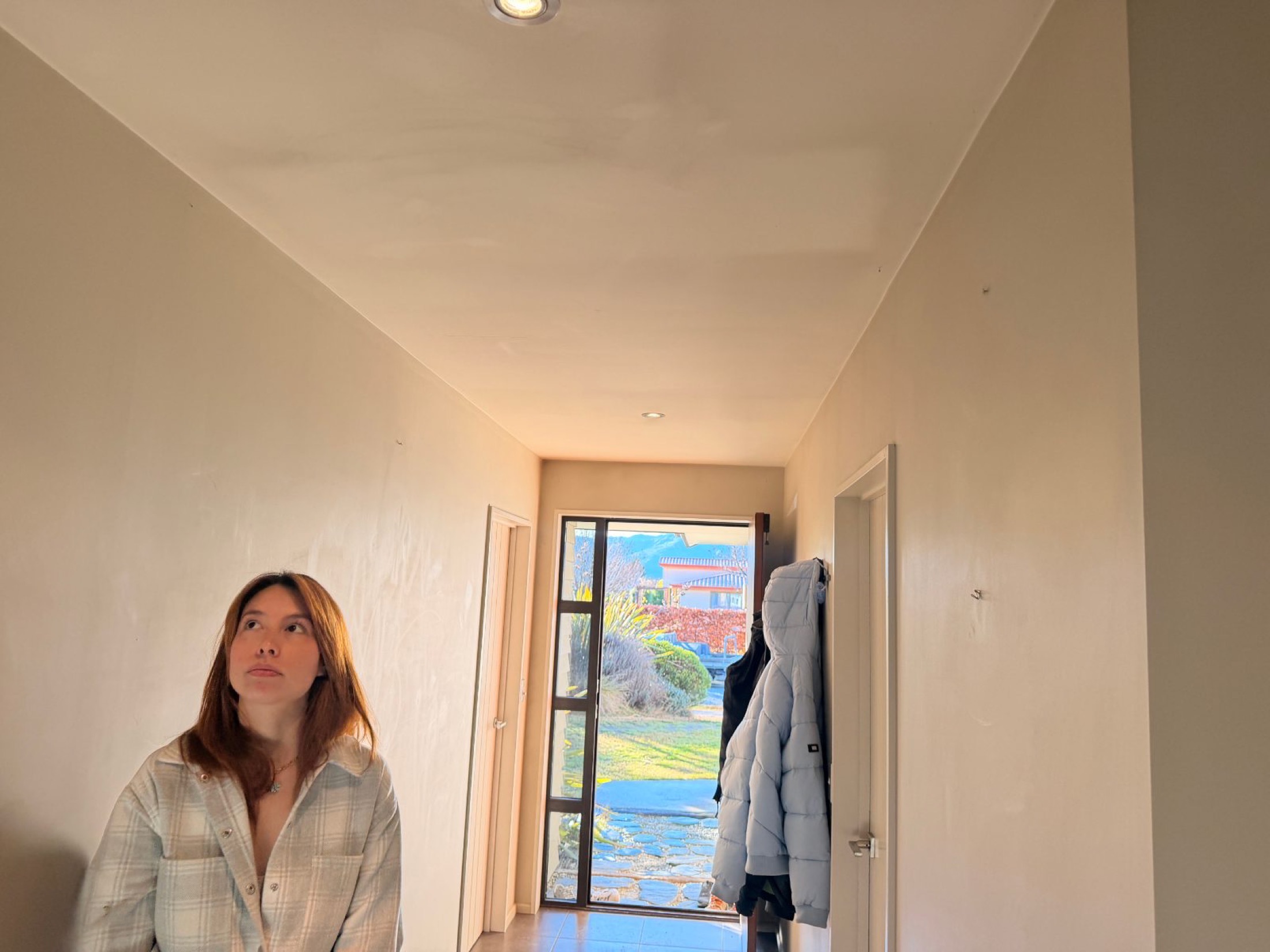
Ghosting often shows first in hallways, on ceilings above unheated spaces, and on the coldest walls - anywhere the surface runs colder than the room.
Ghosting vs mould vs a water stain - how to tell them apart
This is where a lot of DIY repaints go wrong, because the three problems look similar from across the room but need completely different treatment. Here's how I read them on site.
| What you see | Likely cause | The tell |
|---|---|---|
| Even, repeating grey lines or a grid | Ghosting (over framing) | Perfectly regular spacing that matches joist/stud centres; wipes to a grey smudge, not fuzzy |
| Soft clouds or blotches in cold corners, no pattern | Ghosting (patchy insulation) | Worst in corners, behind furniture, above wardrobes; dry and sooty to the touch |
| Fuzzy, speckled black or green spots, often near showers/windows | Mould | Raised, furry texture; a dab of diluted bleach lightens it within a minute |
| A brown-edged ring or tide mark, sometimes crisp | Water stain / leak | Defined edge, often yellow-brown, may feel firm or bubbled; traces to a roof or plumbing source |
| Overall yellow-brown film, heaviest near ceilings | Nicotine or heavy soot | Even discolouration across the whole surface, strongest where air stagnates |
The quick field test: ghosting is a dry, sooty deposit that follows the cold, mould is a living, fuzzy growth that follows the damp, and a water stain has a defined edge and a source above it. If the marks are a tidy repeating pattern, it's almost always ghosting.
Why painting straight over it never works
I'll be blunt, because this is the single most common mistake. Ghosting is a layer of greasy, sooty particles bonded to the paint surface. Roll a fresh coat straight over it and two things go wrong.
First, it bleeds through. Those particles are partly oily, and oily contamination migrates up into a fresh waterborne coat. The shadows swim back to the surface within weeks - sometimes before the paint has even fully cured - and you're staring at the same grid you thought you'd buried.
Second, the new paint doesn't grip. Paint needs a clean, sound surface to bond to. Laid over a greasy film it can end up patchy, and in bad cases it peels, so now you've got ghosting and flaking. More paint is not the answer to ghosting. Preparation is.
The fix that actually holds
The process is the same whether it's a ceiling grid or a ghosted wall, and it's the one we use on the job in the slider below.
- Wash it down. Sugar soap and clean rinse water to cut through the greasy particle build-up. This won't lift the staining out of the surface on its own, but it gives you a sound, de-greased base for the next step. Let it dry fully.
- Seal with a stain-blocking primer. This is the step that separates a fix from a temporary cover-up. A pigmented sealer locks the residual staining underneath so it physically can't bleed through your topcoats. In New Zealand I reach for something like Resene Sureseal (a solventborne sealer built for exactly this), or a shellac/oil-based blocker such as Zinsser B-I-N or Cover Stain on stubborn patches. Waterborne ceiling paint alone will not hold ghosting back - the sealer is doing the real work.
- Two coats of quality topcoat. A flat ceiling white on ceilings, or your chosen wall colour in a washable low-sheen on walls. Two coats give an even sheen and hide the surface map underneath for good.
Here's a bedroom ceiling from an interior job - drag the slider and watch the ghosting disappear once it's washed, sealed and recoated:
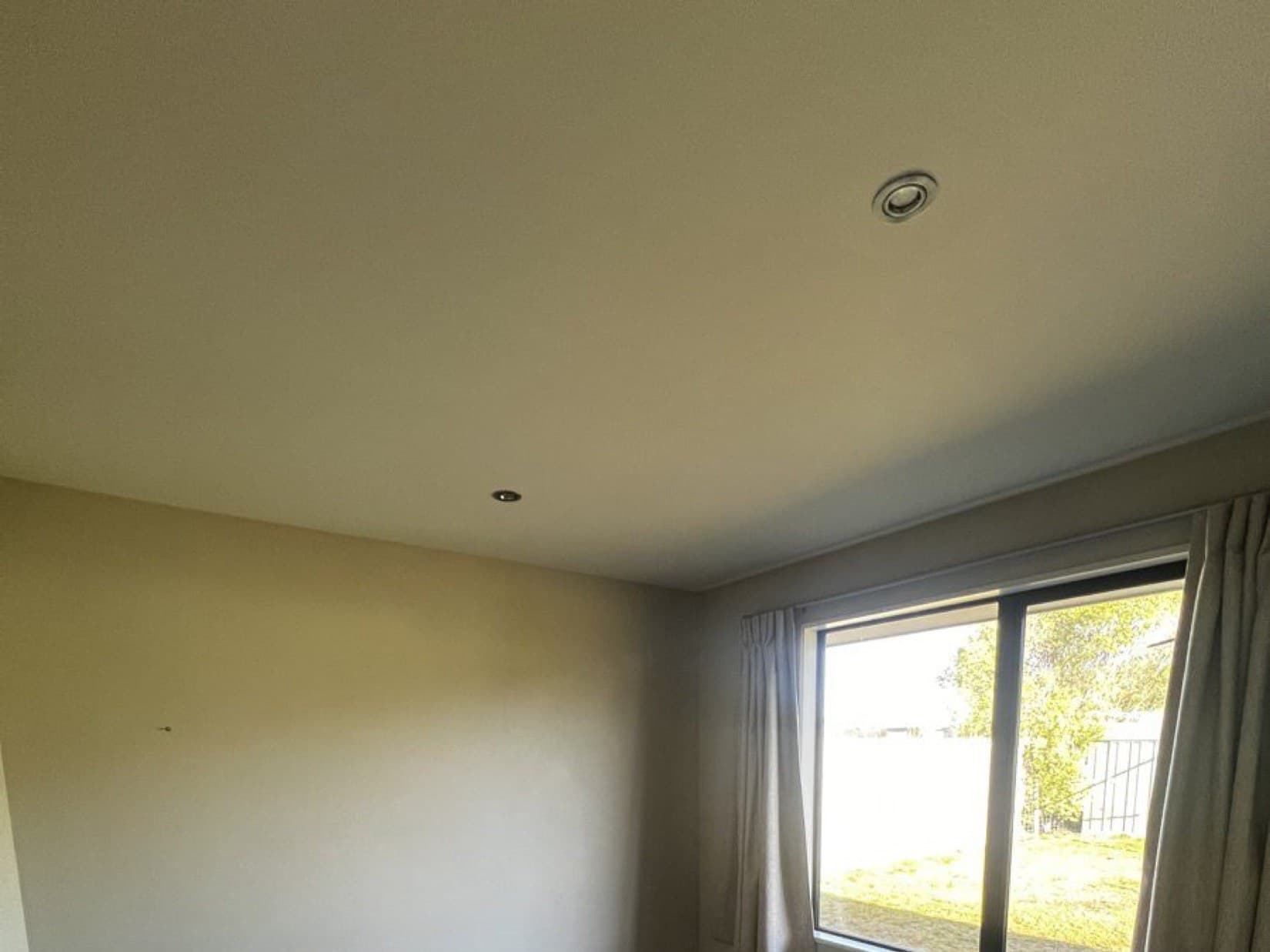
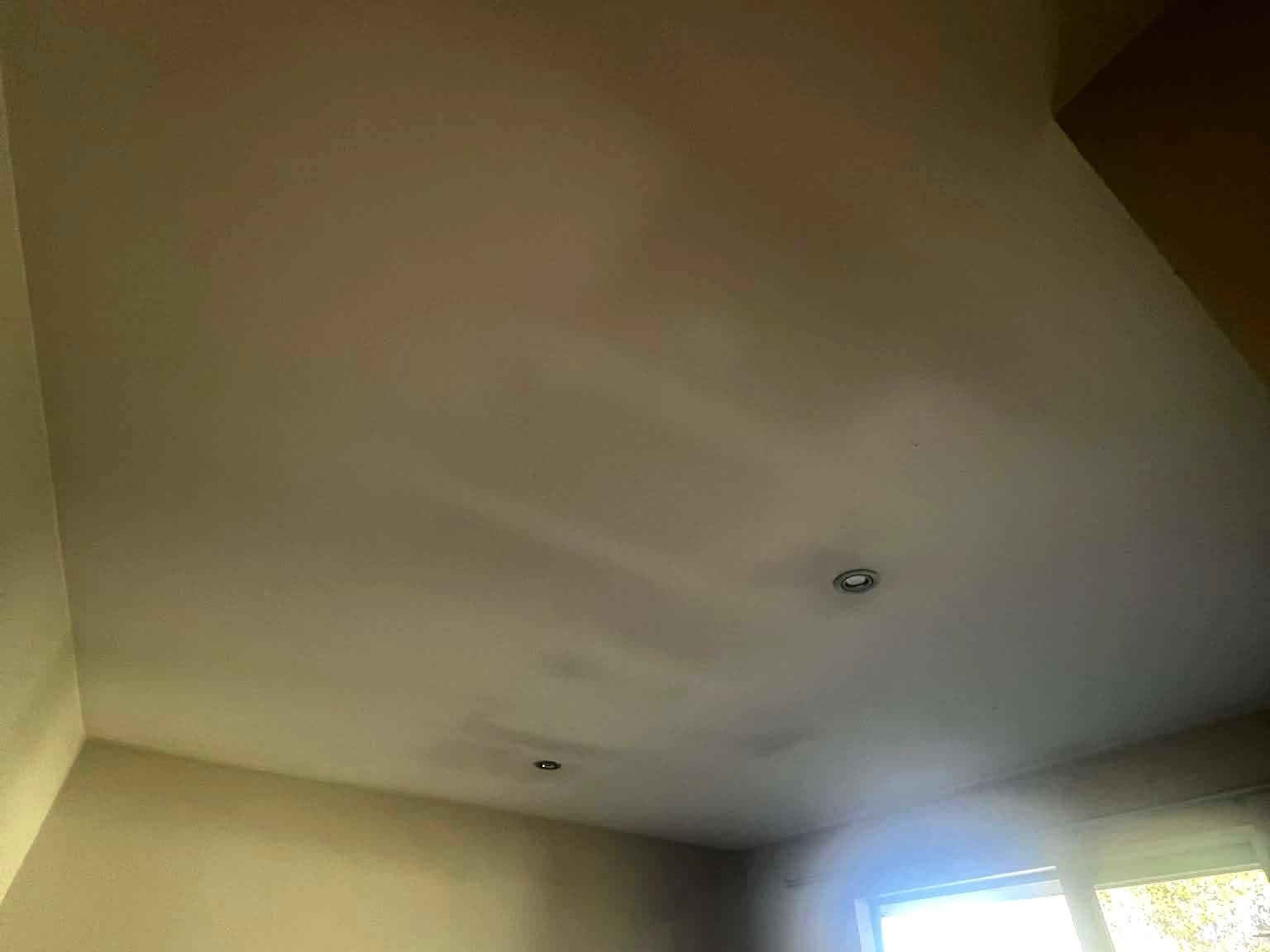
You can see this exact process on a couple of recent jobs over in the Central Otago lakes: a living-area ceiling repaint in Wanaka, where thermal ghosting and movement cracks had built up on the ceiling above a wood burner, and an interior repaint in Albert Town where we washed, sealed and recoated ghosted ceilings to a clean, even finish.
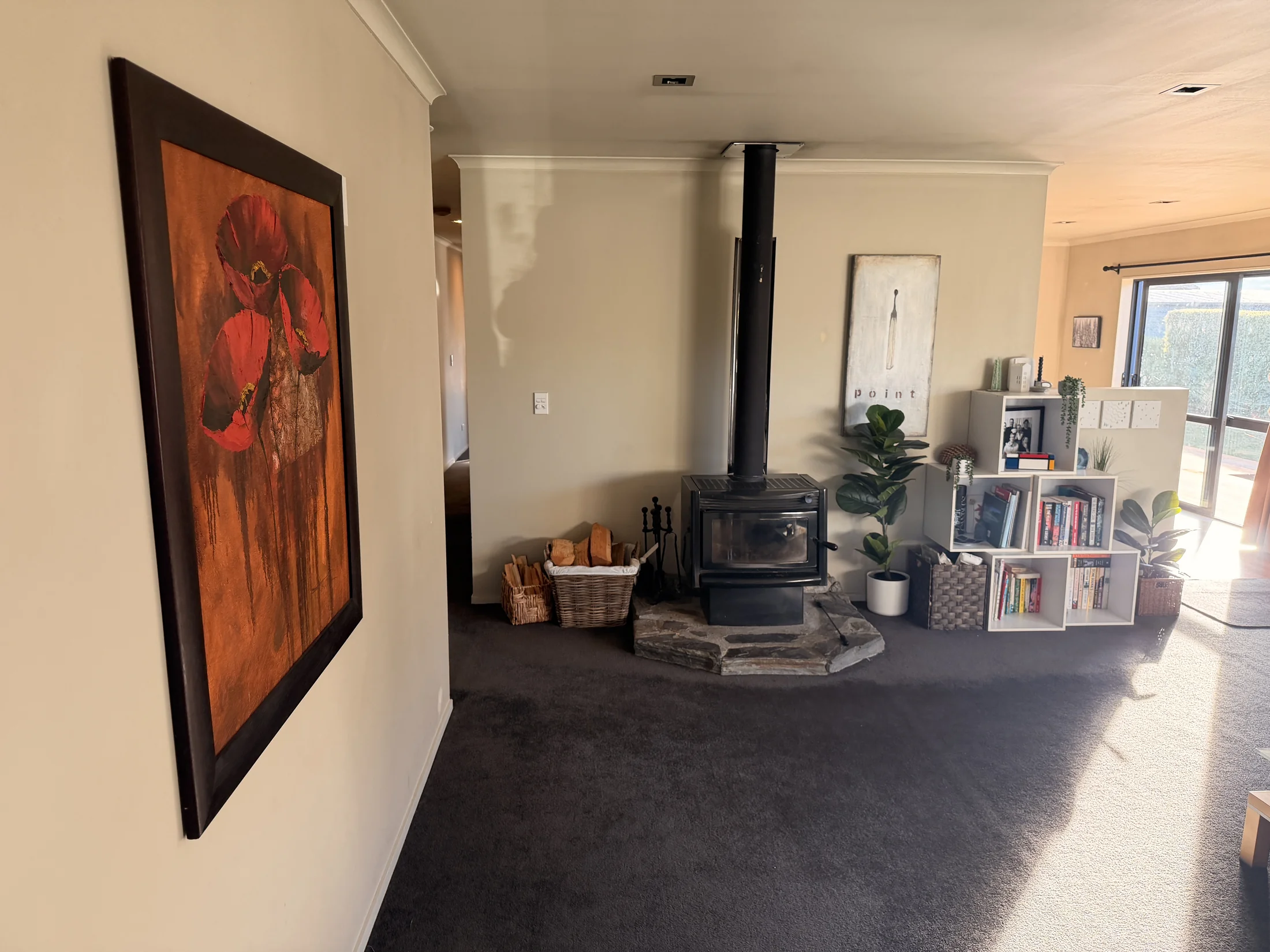
Before: shadowy ghosting had plated out on the ceiling and wall above the wood burner — the warmest, sootiest corner of the room.
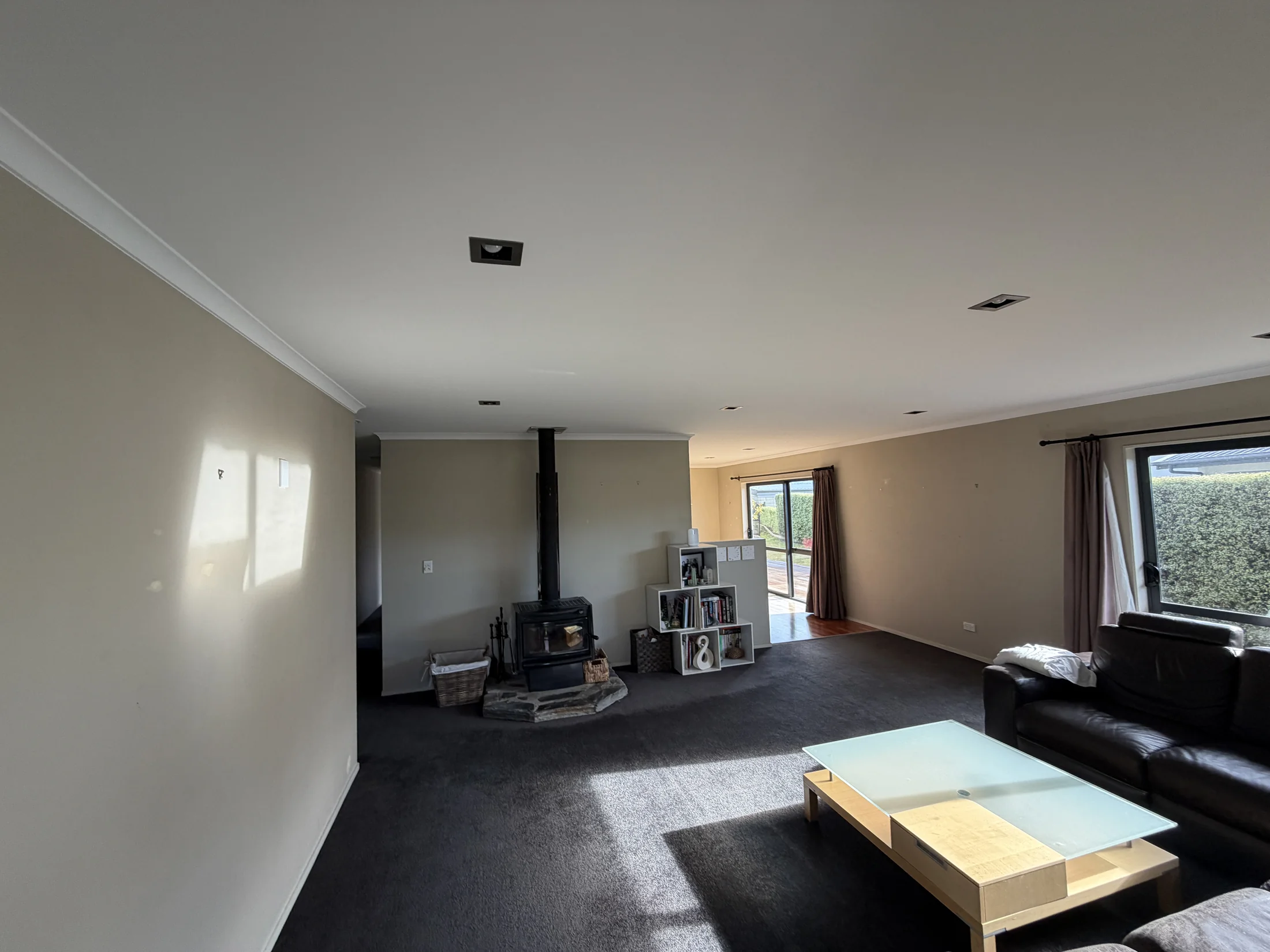
After: washed, sealed with Resene Sureseal and finished with fresh ceiling paint — the ghosting is gone, not just painted over. See the full interior ceiling repaint.
Stopping it coming back
Paint fixes the appearance. If you don't change the conditions underneath, the ghost slowly redraws itself. The good news is the levers are the same everywhere in New Zealand - you're working on the three ingredients from the start of this article: even temperature, less surface moisture, fewer particles in the air.
- Even out the temperature. Topping up ceiling insulation so it's full and consistent is the single biggest fix, because it removes the cold strips the ghost prints onto. Even coverage matters more than sheer depth - a batt that's been squashed or left with gaps is where the lines appear.
- Cut the surface moisture. Ventilate daily: extractor fans in the kitchen and bathroom, a window cracked for ten minutes, and a ventilation or heat-recovery system if condensation is a constant battle. Drier surfaces are far less sticky to airborne particles.
- Reduce the particles. This is the one people forget. Burn dry, well-seasoned firewood (wet wood is a soot factory), keep flued and unflued gas heaters serviced, run the rangehood when you cook, and go easy on candles - they're a surprisingly heavy source of the fine carbon that feeds ghosting.
Do those and a properly washed, sealed and repainted surface will stay clean-looking for years, not months.
When it's a DIY job and when it isn't
Honestly? A single ghosted ceiling in a bedroom is a reasonable weekend job if you're comfortable washing, cutting in and rolling, and you don't skip the sealer. Where I'd pick up the phone to a painter is when the ghosting is widespread through the house, when it's mixed up with mould or a water stain you can't source, or when it's on a high stairwell ceiling that needs proper access. Those are the jobs where the prep is fiddly and the difference between "gone" and "back by spring" is all in the detail.
If you're in the Central Otago lakes and you'd rather it just get sorted properly, that's the kind of interior work I do through Painters Wanaka - flick through a couple of photos and I can usually tell you straight away whether you're looking at ghosting, mould or a leak, and what it'll take to fix.
Understand that ghosting is your wall drawing you a temperature map in soot, and the whole thing stops being mysterious. Clean it, seal it, recoat it, and soften the conditions that drew it - and it stays gone.

About the Author
Bradley Hamilton
Bradley Hamilton has been painting interiors across New Zealand for 15 years, from villas in the cities to alpine homes in Central Otago. He writes about the science behind common paint problems and the prep that actually fixes them, rather than just hiding them for a season.
Visit Lakeside Painting
Comments
Join the conversation by signing in
No comments yet.
Be the first to share your thoughts!